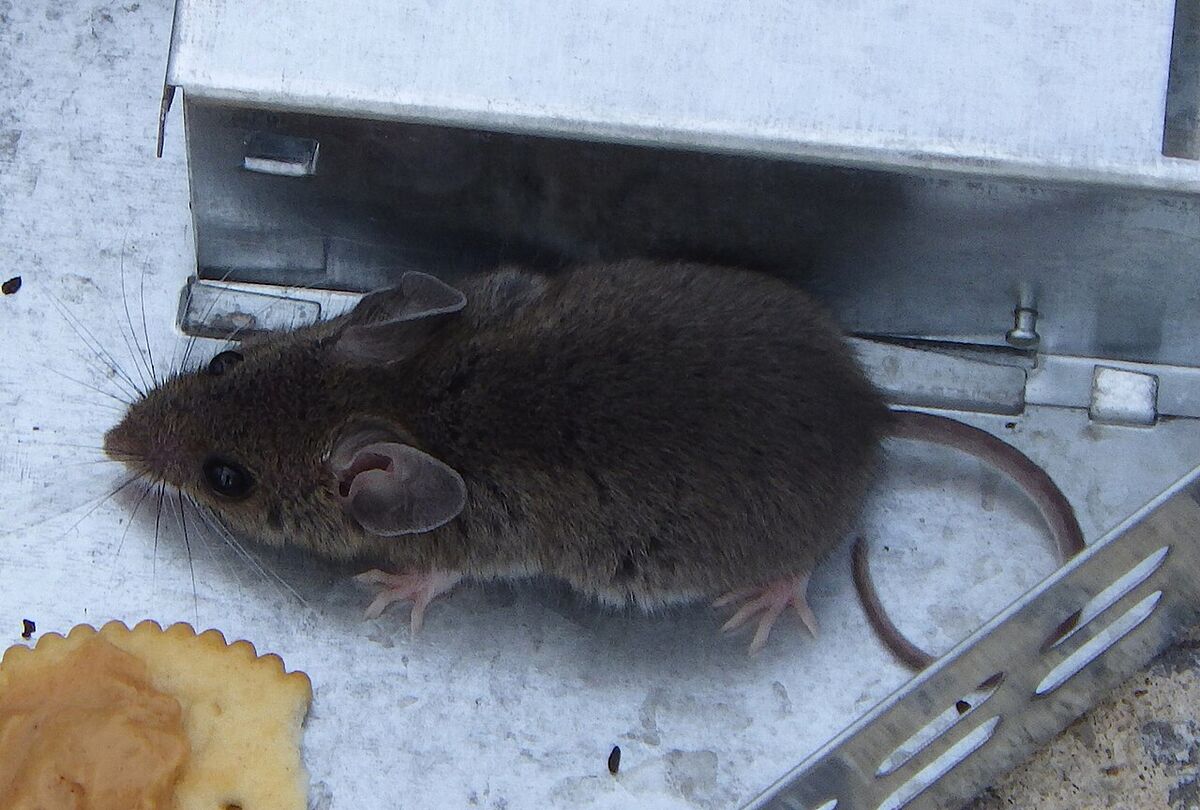
Mice can pass through openings about the size of a dime, which means a typical home usually has more than one possible entry point. Mice also reproduce quickly — a single female can produce dozens of offspring in a year — so a single mouse seen in the kitchen often points to several more nearby. The goal of professional mouse control is to break the cycle: catch the active mice, seal the gaps that let them in, and remove what's keeping them.
House Mice vs. Deer Mice
Two mouse species are common in our region, and they require slightly different handling:
House mice — grey-brown, common indoors year-round, especially in kitchens, pantries, garages and storage areas.
Deer mice — bicoloured (brown back, white belly), more often found in rural homes, sheds, garages, cabins and crawlspaces. Of particular concern because they can carry hantavirus.
For deer mice, we treat clean-up and handling with extra care, including ventilation and PPE recommendations before any clean-up takes place.
Signs of a Mouse Problem
Small dark droppings in drawers, cupboards, pantries, or under appliances
Chewed packaging in stored food
A musky smell in confined areas like under-sink cabinets
Quiet scratching sounds in walls or above ceilings, especially at night
Shredded paper, fabric, or insulation in stored boxes
Pet food bowls being emptied overnight
Greasy smudge marks along baseboards or beams
Pets staring at one spot on a wall or appliance
How Apollo Handles Mouse Control
Mouse control typically includes:
Inspection of kitchens, pantries, garages, crawlspaces and storage areas
Identification of likely entry points and shelter areas
A trapping plan placed along the routes mice actually use
Sealing recommendations for small openings
Advice on dry-food storage, pet food, and clutter reduction
Follow-up visits to confirm activity has stopped
For deer-mouse situations, we'll also walk you through safe clean-up of droppings and nesting material.
Why Mice Choose Some Homes Over Others
Mice are looking for three things: food, water, and shelter. Homes that offer easy access to even small amounts of any of these tend to keep having issues. Common attractants include:
Open pet food bags or overnight food bowls
Pantry items stored in original cardboard or thin packaging
Garage clutter that provides nesting cover
Cluttered crawlspaces or attics
Garden compost, bird seed, or fruit trees near the building
Outdoor wood piles within a few feet of the structure
Long vegetation pressed against exterior walls
Where Mice Enter Most Homes
Mice rarely chew their way in from scratch — they find existing gaps. Some of the most common ones we find:
Gaps around dryer vents and stove hood ducts
Worn weatherstripping under exterior doors
Pipe and cable penetrations under sinks and behind appliances
Gaps where the siding meets the foundation
Crawlspace and attic vents with damaged screens
Garage door corners and bottom seals
Holes behind kitchen cabinets where plumbing enters
Mouse Control That Lasts
Trapping the mice currently in the building is only half the job — without exclusion and source reduction, more mice typically follow. Effective mouse control combines all three: knockdown of the current population, sealing the gaps that brought them in, and recommendations that reduce what was attracting them.